Emerald Gemstones, Value and Identification
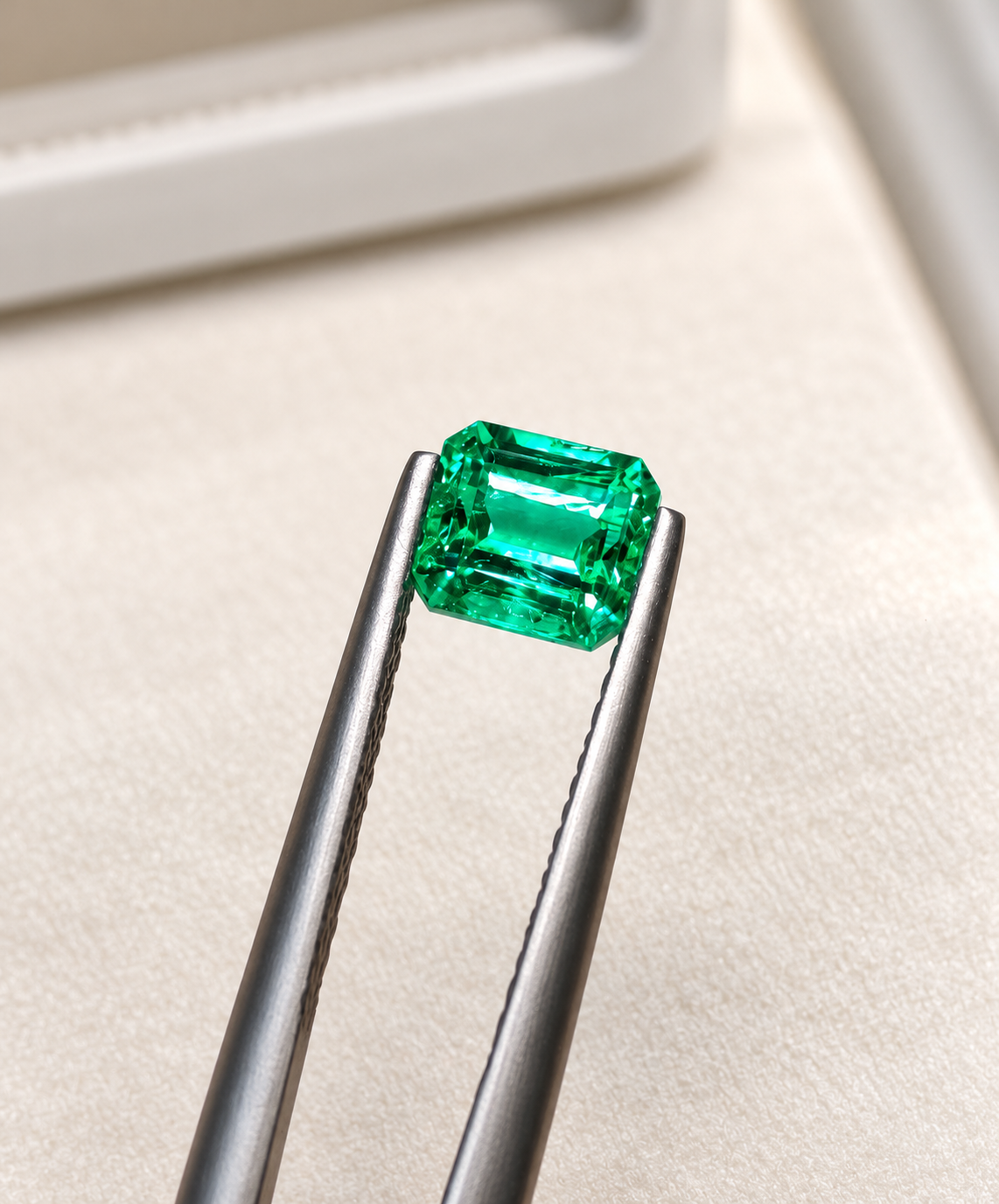
Emerald, known as Marakata (මරකත) in Sri Lanka, is one of the world’s most famous and desirable coloured gemstones. Its distinctive green colour, rarity, history and association with some of the world’s most prestigious jewellery have made natural emerald gemstones highly sought after in the international gemstone market.
From deep Colombian emeralds to distinctive Zambian emeralds, natural emeralds occur in a fascinating range of green colours and internal characteristics.
For buyers looking for a natural emerald gemstone, understanding colour, clarity, inclusions, origin, treatment and certification is essential before making a purchase.
What Is an Emerald?
Emerald is the green variety of the mineral beryl. Its beautiful green colour is mainly associated with trace amounts of chromium and/or vanadium within the beryl crystal structure.
Key properties of Emerald
- Mineral: Beryl
- Chemical formula: Be₃Al₂Si₆O₁₈
- Colour: Light green to vivid deep green
- Crystal system: Hexagonal
- Mohs hardness: Approximately 7.5–8
- Specific gravity: Approximately 2.67–2.78
- Refractive index: Approximately 1.56–1.59, depending on composition and specimen
- Optical character: Doubly refractive
The most desirable emeralds generally have an attractive, vivid and well-saturated green colour combined with good transparency and a pleasing appearance.
Why Are Emeralds Green?
The green colour of emerald is caused primarily by trace elements incorporated into the beryl crystal structure. Depending on the geological origin, chromium and vanadium can contribute significantly to emerald’s characteristic green colour. This is one reason emeralds from different geological deposits can display noticeably different shades of green.
The colour may range from:
- Pale green
- Bluish green
- Yellowish green
- Medium green
- Rich green
- Vivid deep green
Among collectors and jewellery buyers, a strong, attractive and well-saturated green is generally highly desirable.
Natural Emerald vs Synthetic Emerald
When buying an emerald, one of the most important questions is whether the stone is natural or laboratory-grown.
Natural Emerald
A natural emerald formed through geological processes over millions of years. Natural emeralds commonly contain internal characteristics and inclusions created during their natural formation.
Laboratory-Grown Emerald
Synthetic or laboratory-grown emerald has essentially the same chemical and crystal structure as natural emerald but is produced artificially. It should therefore not be represented as a natural emerald.
Emerald Inclusions: Why They Matter
One of the most fascinating characteristics of natural emerald is its internal world. Unlike some other gemstones where extreme clarity is strongly preferred, natural emeralds commonly contain visible inclusions.
These inclusions can include:
- Mineral crystals
- Fluid inclusions
- Healed fractures
- Growth features
- Fine internal lines
- Three-phase inclusions in some emeralds
The characteristic internal appearance of an emerald is sometimes referred to as “Jardin,” the French word for “garden.” The term describes the garden-like network of internal inclusions that can give a natural emerald its distinctive character.
Are Emerald Inclusions Valuable?
This is an important point when buying or pricing a natural emerald gemstone. It is incorrect to say that more inclusions automatically mean a higher-value emerald. Instead, the international emerald market considers the type, appearance, quantity, location and effect of the inclusions.
Attractive natural inclusions can add character
A natural emerald with beautifully arranged internal characteristics can have a distinctive appearance and may help support its natural identity. In some cases, collectors appreciate an emerald precisely because its internal features give the stone a unique natural character.
But excessive inclusions can reduce value
If inclusions are:
- Too numerous
- Very dark
- Visually distracting
- Affecting transparency
- Reaching the surface
- Creating significant durability concerns
the value can decrease.
Therefore, the ideal situation is not necessarily an inclusion-free emerald. Instead, an attractive natural emerald may have:
Beautiful colour + good transparency + attractive natural inclusions + good durability
This balance is important when evaluating an emerald for the international market.
How Is a Natural Emerald Valued?
The value of a natural emerald gemstone depends on several factors.
1. Colour
Colour is one of the most important factors affecting emerald value. High-quality emeralds can display a rich, vivid and well-saturated green.
The most desirable colour depends on the individual stone and market, but attractive medium-to-deep green with good saturation is generally highly sought after. Colour is often considered more important than achieving extreme clarity in emerald.
2. Clarity and Transparency
Emeralds are commonly included, so they are evaluated differently from many other transparent gemstones. A highly transparent natural emerald with attractive colour can command a significant premium.
However, a stone does not necessarily need to be completely free of inclusions to be valuable.
The key is how the inclusions affect:
- Transparency
- Beauty
- Durability
- Overall appearance
3. Natural Inclusions
Natural inclusions can be important when establishing whether an emerald is natural. A beautiful internal pattern may also give a gemstone its own individual identity.
For collectors, a natural emerald with attractive and characteristic inclusions can be much more interesting than a heavily treated or artificial-looking stone. However, inclusions should always be evaluated in context rather than automatically treated as a positive or negative feature.
4. Carat Weight
Larger natural emeralds of good quality can become increasingly rare. If colour, clarity, transparency and overall quality remain strong, larger stones may command significantly higher prices per carat.
However, carat weight alone does not determine emerald value.
A smaller, vivid and attractive natural emerald can be more valuable than a much larger stone with weak colour or poor transparency.
5. Cut
The cut of an emerald should maximise its:
- Colour
- Beauty
- Face-up appearance
- Light return
- Overall proportions
The classic emerald cut is strongly associated with emerald gemstones, although emeralds can also be fashioned into oval, cushion, pear, round and other shapes.
Because emeralds commonly contain fractures and inclusions, cutting also requires careful consideration of durability.
Why the Emerald Cut Is So Popular
The emerald cut is a step-cut style that is particularly associated with emerald gemstones. Its broad, open facets can display the gemstone’s colour clearly and create an elegant appearance. However, emeralds are not restricted to emerald cuts.
A skilled cutter may choose another shape depending on:
- Rough crystal shape
- Colour distribution
- Clarity
- Fractures
- Weight retention
- Final beauty
For valuable natural emeralds, cutting is a balance between maximising beauty and preserving valuable rough material.
Major Emerald Sources Around the World
Natural emeralds are found in several countries, with some origins particularly famous in the international market.
🇨🇴 Colombia
Colombian emeralds are among the most famous emeralds in the world. They are particularly known for their attractive green colours and historic importance in the international emerald trade.
🇿🇲 Zambia
Zambian emeralds are also highly regarded internationally. They can display strong green colours and often have different visual characteristics from Colombian emeralds.
🇧🇷 Brazil
Brazil produces emeralds as well as many other important coloured gemstones.
🇦🇫 Afghanistan
Afghanistan is known for producing emeralds, particularly from the Panjshir region.
🇵🇰 Pakistan
Pakistan has also produced natural emeralds, including material from the Swat region.
The origin of an emerald can influence its market appeal and value, but origin should ideally be determined by a qualified gemological laboratory rather than assumed from appearance alone.
How to Identify a Natural Emerald
Visual inspection can provide useful clues, but professional testing is recommended for valuable stones.
A gemologist may examine:
10× Loupe or Microscope
Look for:
- Natural inclusions
- Growth structures
- Fluid inclusions
- Mineral crystals
- Healed fractures
- Characteristic internal features
Refractive Index
Emerald typically falls within the beryl refractive-index range, although exact values can vary with composition.
Specific Gravity
Emerald generally has an SG in the approximate range of 2.67–2.78.
Spectroscopic Testing
A spectroscope or more advanced laboratory instruments can provide additional information about the gemstone’s composition and colour-causing elements.
Treatment Examination
Advanced examination may help determine whether fractures have been filled with oil, resin or other substances.
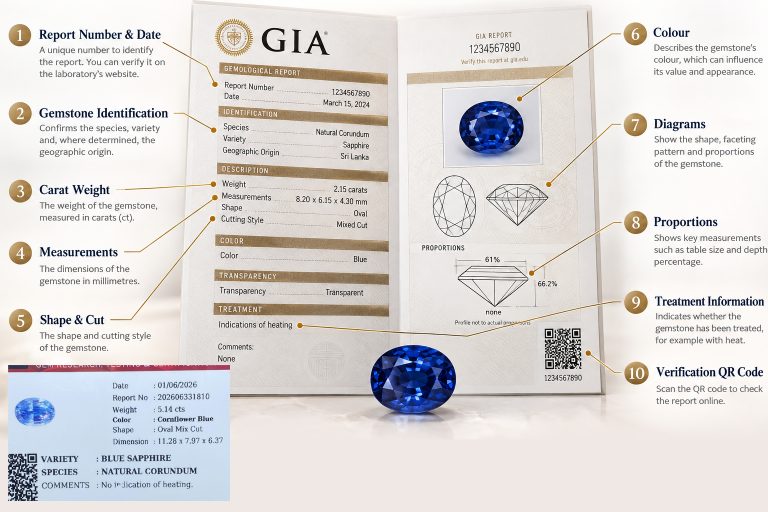
For expensive natural emerald gemstones, a recognised gemological laboratory report provides much greater confidence.
Emerald Origin and Certification
If an emerald is being sold as a valuable natural gemstone, certification can provide important information.
A laboratory report may help establish:
- Natural or synthetic status
- Gemstone identity
- Detectable treatments
- Sometimes geographic origin
However, origin determination is not always possible for every emerald.
Therefore, it is important to distinguish between:
“Natural Emerald”
and
“Colombian Emerald” or “Zambian Emerald.”
A claim of geographic origin should ideally be supported by an appropriate laboratory report.