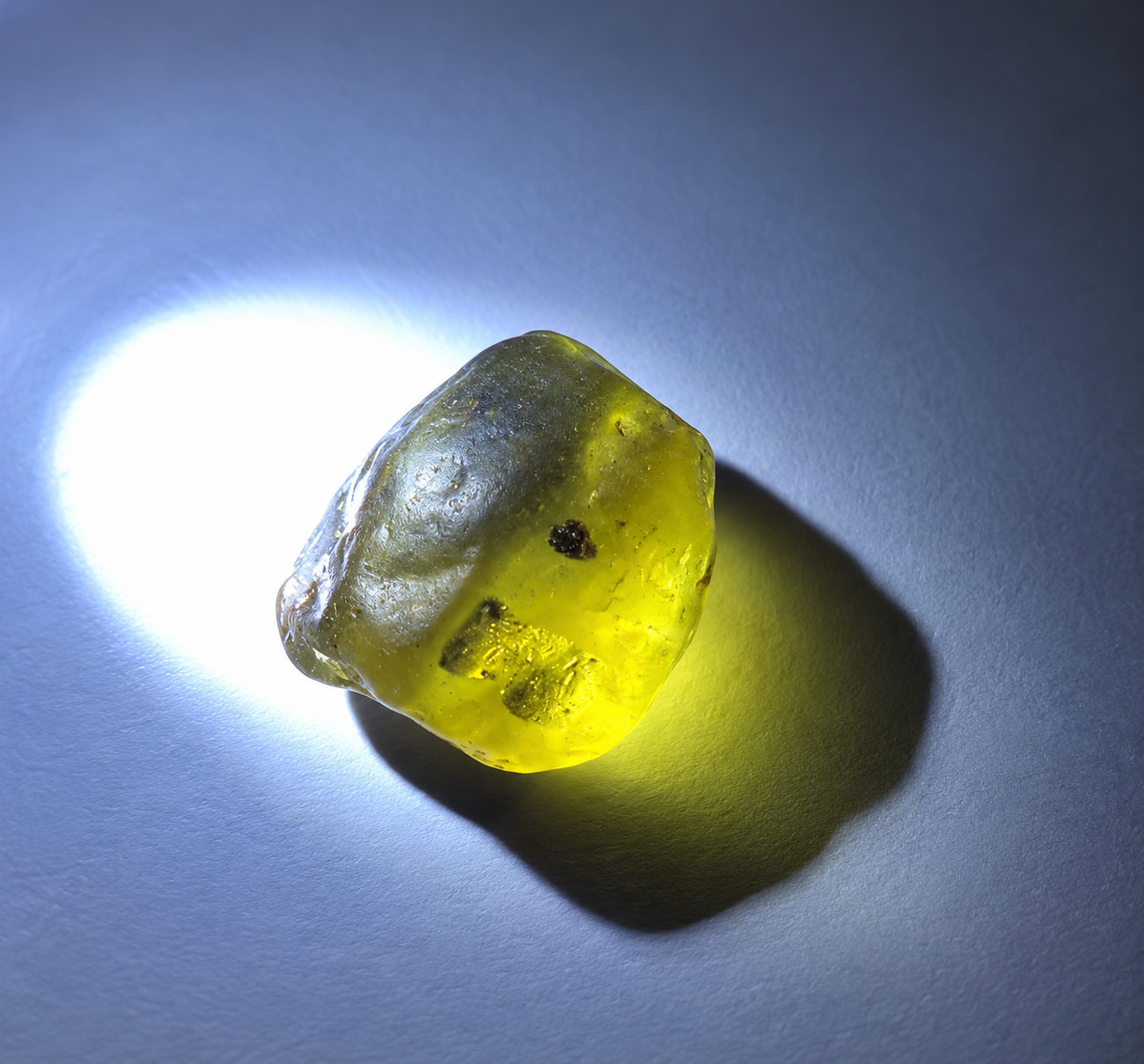
Among the world’s rarest and most fascinating gemstones, Alexandrite holds a truly exceptional place. Famous for its remarkable ability to change colour under different lighting conditions, Alexandrite can appear green or bluish-green in daylight and reveal shades of red or purplish-red under warm incandescent light.
This extraordinary phenomenon, known as the colour-change effect, has made Alexandrite one of the most intriguing gemstones for collectors, jewellery enthusiasts, and connoisseurs around the world.
Often described poetically as “Emerald by day, Ruby by night,” Alexandrite offers something few other gemstones can: a constantly changing appearance that reveals a different character as the light changes.
What Is Alexandrite?
Alexandrite is a rare variety of the mineral Chrysoberyl, with the chemical composition BeAl₂O₄.
What makes Alexandrite different from ordinary Chrysoberyl is its remarkable colour-changing ability. This phenomenon is primarily associated with trace amounts of chromium within the gemstone’s crystal structure.
Chromium affects the way Alexandrite absorbs different wavelengths of visible light. As the spectral composition of the surrounding light changes, the colours perceived by the human eye can change dramatically.
Alexandrite may therefore appear predominantly green in daylight while showing a red or purplish-red appearance under incandescent or warm artificial lighting.
Although Chrysoberyl itself is uncommon, fine natural Alexandrite is exceptionally rare.
Why Does Alexandrite Change Colour?
The colour-change effect is the defining characteristic of Alexandrite.
Under natural daylight or a suitable daylight-equivalent light source, a fine Alexandrite may display:
- Green
- Bluish-green
- Green with subtle yellow or blue undertones
Under warm incandescent lighting, the same gemstone may appear:
- Red
- Purplish-red
- Reddish-purple
- Raspberry or reddish tones
This happens because the gemstone selectively absorbs different portions of the visible light spectrum. The balance of wavelengths reaching the eye changes according to the light source, producing the dramatic shift in perceived colour.
Alexandrite can also display pleochroism, meaning different colours can be observed from different crystallographic directions. However, pleochroism should not be confused with the primary mechanism responsible for the famous Alexandrite colour-change effect.
How Strong Is the Colour Change?
Not every Alexandrite changes colour to the same degree.
Some stones may show only a subtle shift, while exceptional examples can display a striking transition from green in daylight to rich red under incandescent light.
The strength and attractiveness of this colour change are important factors when assessing the gemstone’s quality and value.
“Emerald by Day, Ruby by Night”
Alexandrite is sometimes described as “Emerald by day, Ruby by night.”
This poetic expression refers to its green appearance under daylight and red appearance under warm incandescent lighting.
Alexandrite is, of course, neither Emerald nor Ruby. The expression simply captures the dramatic transformation that makes this gemstone so fascinating.
Few natural gemstones can create such a noticeable visual change while remaining the very same stone.
The History of Alexandrite
Alexandrite was first identified in the 1830s in the Ural Mountains of Russia.
The gemstone was named in connection with Alexander II, who later became Emperor of Russia. Its green and red colour combination was also particularly significant because green and red were associated with the colours of Imperial Russia.
The original Russian discoveries gave Alexandrite a strong historical connection with royalty and prestige.
The Russian deposits became famous for producing exceptional material, although the historic Ural deposits are now largely depleted compared with their earlier production.
Today, Alexandrite from different parts of the world is found in the international gemstone market, with each source potentially producing material with different characteristics.
Where Is Alexandrite Found?
Alexandrite is rare, but natural material has been discovered in several locations around the world.
Russia
Russia is historically the most famous source of Alexandrite. The original deposits in the Ural Mountains produced some of the finest examples known from the early history of the gemstone.
Sri Lanka
Sri Lanka, historically known as Ceylon, is one of the world’s most celebrated sources of natural gemstones.
The island is renowned for its extraordinary gemstone diversity, and Alexandrite has also been found within Sri Lankan gem deposits.
The Ratnapura region, widely regarded as the heart of Sri Lanka’s traditional gem industry, is particularly famous for producing a remarkable variety of gemstones.
Sri Lankan Alexandrite is of special interest to collectors because of its natural origin and the distinctive characteristics that can occur in material from the island.
However, as with Alexandrite from every locality, quality can vary considerably. Colour, colour-change strength, clarity, transparency, size, cut, and confirmation of natural origin all need to be considered when evaluating an individual stone.
Brazil
Brazil is another important source of Alexandrite and has produced material with attractive colour-change characteristics.
India
Alexandrite has also been reported from certain areas of India, contributing to the gemstone’s diverse geographic history.
Tanzania
Tanzania is another African source associated with Alexandrite and other varieties of Chrysoberyl.
Alexandrite has also been reported from other localities. However, the quality and characteristics of Alexandrite can differ significantly between deposits.
Alexandrite from Sri Lanka
For a gemstone house focused on Ceylon gemstones, Sri Lankan Alexandrite deserves particular attention.
Sri Lanka’s gem deposits are famous for their geological diversity and for producing gemstones through traditional alluvial mining systems. Alexandrite found in Sri Lanka can be particularly fascinating to collectors interested in the island’s natural gemstone heritage.
The connection between Alexandrite and Sri Lanka is also part of the broader story of Ceylon’s long-standing reputation as a source of exceptional coloured gemstones.
When considering a gemstone described as Ceylon or Sri Lankan Alexandrite, however, the origin should not simply be assumed from appearance. Reliable provenance information and appropriate gemological documentation are important, particularly for high-value stones.
At Ceylon Gem Atelier, we believe that the story behind a gemstone is just as important as its beauty — including its natural characteristics, origin, treatment status, and documentation.
What Determines the Value of Alexandrite?
The value of Alexandrite can vary enormously.
Unlike many gemstones where colour alone is the dominant factor, Alexandrite is judged by a combination of characteristics, with the quality of its colour change playing a particularly important role.
1. Strength of Colour Change
This is one of the most important characteristics.
A gemstone showing a strong and obvious transition from green or bluish-green in daylight to red or purplish-red under incandescent lighting can be highly desirable.
A dramatic colour change can significantly increase the gemstone’s appeal and value.
2. Quality of the Colours
The actual colours displayed are also important.
A vivid green or bluish-green daylight colour combined with an attractive red or purplish-red incandescent colour is generally more desirable than a weak, greyish, brownish, or muted appearance.
3. Clarity and Transparency
Clarity refers to the presence and visibility of inclusions within the gemstone.
Exceptional Alexandrite with good transparency can be particularly valuable. However, natural gemstones commonly contain inclusions, and the presence of inclusions does not automatically mean that a stone is of poor quality.
The overall combination of clarity, colour, transparency, size, and colour change needs to be considered.
4. Cut
The quality of the cut can have a significant influence on how Alexandrite appears.
A well-proportioned and carefully finished gemstone can interact beautifully with light, enhancing its brilliance, transparency, and colour characteristics.
Because Alexandrite’s appearance changes with lighting, cutting also plays an important role in how its colour-change effect is perceived.
5. Carat Weight
Large, fine-quality natural Alexandrite is exceptionally rare.
Finding a larger gemstone that simultaneously possesses an attractive body colour, strong colour change, good transparency, and good cutting becomes increasingly difficult as carat weight increases.
Consequently, exceptional larger stones can command very high prices.
6. Natural Origin
Whether an Alexandrite is natural or laboratory-grown is another critical factor.
Natural Alexandrite formed through geological processes over millions of years and is extremely rare.
Laboratory-grown Alexandrite can reproduce many of the optical and chemical characteristics of natural Alexandrite, including colour change, but it does not possess the same geological rarity and collector significance.
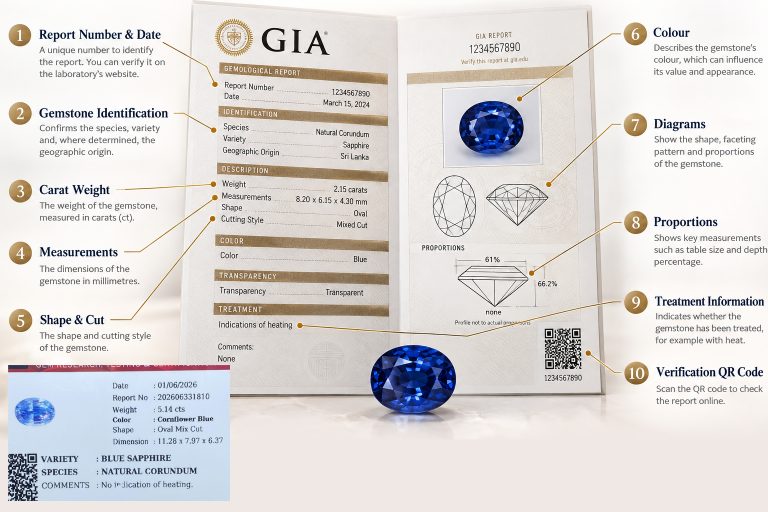
For valuable gemstones, independent gemological documentation is strongly recommended.
Is Alexandrite an Expensive Gemstone?
Fine natural Alexandrite can be an exceptionally valuable gemstone.
However, there is no single price for Alexandrite.
Two stones of the same carat weight can have dramatically different values depending on their colour, colour-change strength, clarity, transparency, cut, natural origin, treatment status, and documentation.
Exceptional natural Alexandrite displaying a strong and attractive green-to-red colour change can command thousands of dollars per carat, and outstanding stones can reach considerably higher levels.
The most important point is that carat weight alone does not determine the value of Alexandrite.
A smaller stone with an exceptional colour change can be considerably more desirable than a larger stone with a weak colour change or less attractive colours.
For high-value Alexandrite, professional gemological examination is an important part of the purchasing process.
Natural Alexandrite vs. Laboratory-Grown Alexandrite
When purchasing Alexandrite, one of the most important questions is whether the gemstone is natural or laboratory-grown.
Natural Alexandrite
Natural Alexandrite was formed naturally within the Earth’s geological environment. Fine natural material is extremely rare, particularly when it combines:
- Strong colour change
- Attractive green and red colours
- Good transparency
- Fine cutting
- Larger carat weight
Laboratory-Grown Alexandrite
Laboratory-grown Alexandrite is produced through controlled technological processes.
It can display impressive colour-changing characteristics and may be suitable for jewellery, but its rarity and market value are fundamentally different from those of natural Alexandrite.
For collectors and buyers purchasing a valuable gemstone, an independent gemological report can provide important confirmation of its identity and characteristics.
How Can Alexandrite Be Identified?
Observing the colour change is a useful starting point when examining a suspected Alexandrite.
The gemstone can be observed under different lighting conditions.
Step 1: Observe Under Daylight
View the gemstone under natural daylight or an appropriate daylight-equivalent light source.
Note its body colour, transparency, and overall appearance.
Step 2: Observe Under Incandescent Light
Move the gemstone under a warm incandescent or suitable warm artificial light source.
Observe whether the gemstone shifts toward red, purplish-red, or related tones.
Step 3: Compare the Two Appearances
The difference between the two lighting environments can help reveal the gemstone’s colour-change effect.
However, colour change alone cannot prove that a gemstone is natural Alexandrite.
Other materials, including laboratory-grown stones and certain colour-change gemstones, can display similar effects.
Proper identification requires appropriate gemological testing, specialized instruments, and examination by a qualified gemologist.
For valuable natural Alexandrite, an independent laboratory report provides an additional level of confidence.
Is Alexandrite Suitable for Jewellery?
Yes. Alexandrite is a beautiful and relatively durable gemstone for jewellery.
With a Mohs hardness of approximately 8.5, it is suitable for a variety of jewellery applications, including:
- Engagement and statement rings
- Pendants
- Earrings
- Bracelets
- Custom jewellery
- Collector’s jewellery
Its durability makes it suitable for regular jewellery use, although proper care is still important.
Like all gemstones, Alexandrite can be damaged by severe impact, improper handling, or exposure to harsh chemicals.
Valuable Alexandrite jewellery should be handled carefully and professionally inspected from time to time to ensure that the stone and its setting remain secure.
Alexandrite as a June Birthstone
Alexandrite is one of the traditional birthstones associated with June, alongside Pearl and Moonstone.
Its unusual colour-changing nature makes it an especially distinctive choice for someone born in June.
For those looking for a birthstone that is rare, unusual, and highly individual, natural Alexandrite offers something truly special.
Rather than simply displaying one colour, it can reveal an entirely different appearance depending on the light.
Why Is Alexandrite So Fascinating?
The beauty of Alexandrite lies in its ability to transform.
A gemstone that appears green in daylight can reveal rich red or purplish-red tones under warm artificial lighting.
This is not an artificial colour effect or a surface treatment. It is a remarkable optical characteristic resulting from the gemstone’s natural composition and interaction with light.
Its rarity makes the phenomenon even more special.
Fine natural Alexandrite combines:
Rarity + Colour Change + Beauty + Durability + History
This unique combination has made Alexandrite one of the world’s most fascinating collector gemstones.
Alexandrite: A Gemstone That Changes With the Light
Alexandrite is much more than a beautiful gemstone. It is a remarkable example of the relationship between mineral chemistry, crystal structure, and light.
Its story begins deep within the Earth and continues through the hands of miners, cutters, gemologists, collectors, and jewellery designers.
For collectors, the attraction is not simply the colour of the stone.
It is the transformation.
The same gemstone can reveal one personality in daylight and another under warm artificial lighting.
That extraordinary ability is what makes Alexandrite one of nature’s most captivating gemstones.
Discover Alexandrite with Ceylon Gem Atelier
At Ceylon Gem Atelier, we believe that exceptional gemstones deserve more than admiration — they deserve understanding.
From the origin and natural formation of a gemstone to its colour, clarity, treatment, cutting, and documentation, every detail contributes to its identity and value.
As a Sri Lankan gemstone brand, we are particularly passionate about showcasing the extraordinary gemstone heritage of Ceylon, while maintaining a strong focus on authenticity, transparency, and responsible presentation.
Whether you are a collector, jewellery enthusiast, or simply discovering Alexandrite for the first time, this remarkable colour-changing gemstone offers a rare glimpse into the extraordinary beauty created by nature.
A gemstone that changes with the light. A beauty that reveals something new every time you see it.
Explore the world of rare Ceylon gemstones with Ceylon Gem Atelier.