What Is Sapphire?
Sapphire is one of the world’s most sought-after coloured gemstones and one of Sri Lanka’s most famous natural treasures. This Ceylon sapphire guide explains what sapphire is, how to evaluate it, and what to look for when buying a natural Ceylon sapphire.
Historically known as Ceylon, Sri Lanka is renowned for producing beautiful sapphires in a wide range of colours. At Ceylon Gem Atelier, we carefully select Ceylon sapphires based on their colour, clarity, cut, size, treatment and overall character.
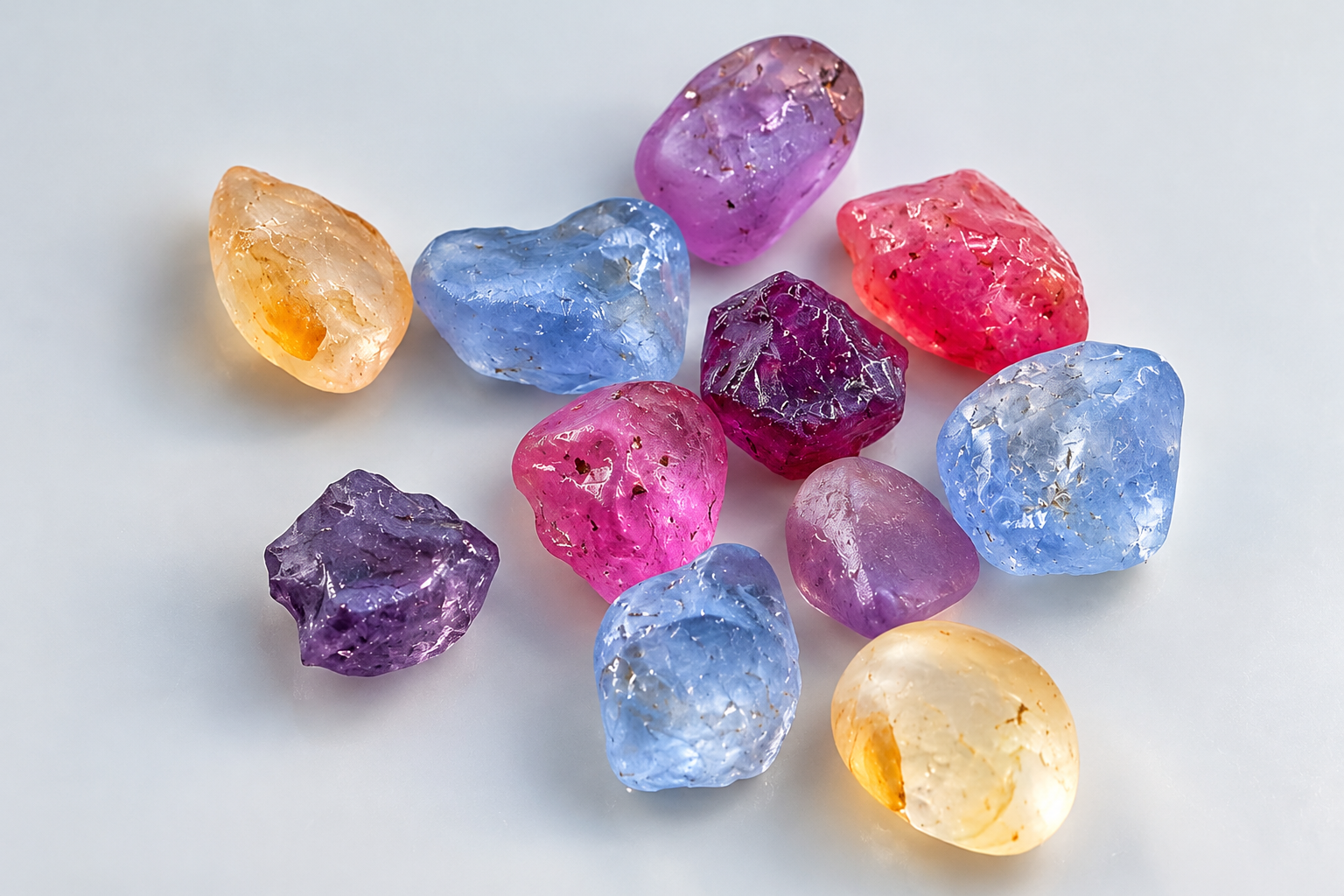
Sapphire is a variety of the mineral corundum. Although best known for its blue colour, natural sapphire can occur in many colours, including pink, yellow, green, purple and orange.
Padparadscha sapphire, with its distinctive pink-orange colour range, is one of the rarest and most recognised varieties of sapphire.
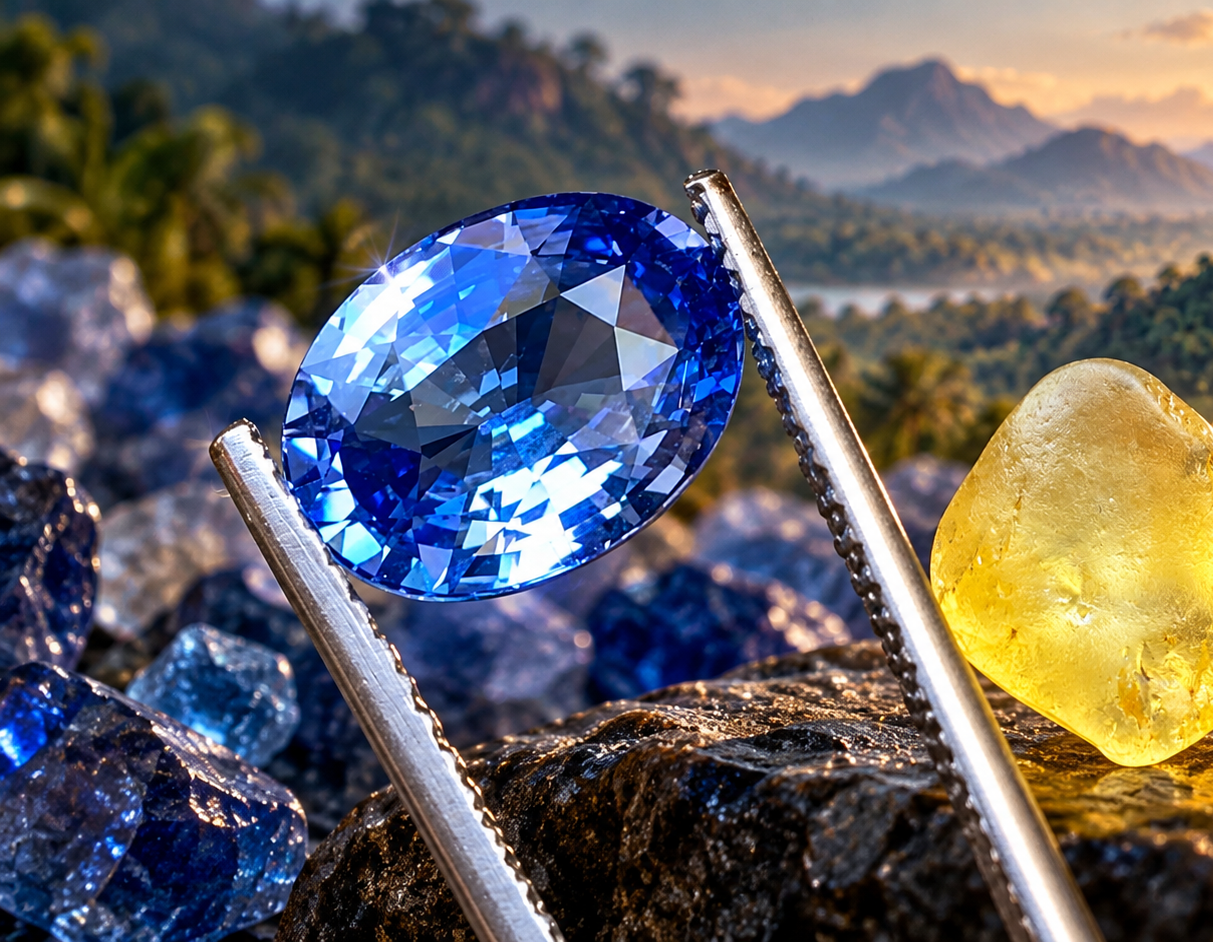
Ceylon sapphire refers to sapphire that comes from Sri Lanka.
Sri Lanka has a long history of gemstone mining and is especially known for blue sapphire, Padparadscha, pink sapphire, yellow sapphire and other fancy-coloured sapphires.
When origin matters, appropriate laboratory documentation should support the origin claim.
Types of Ceylon Sapphire
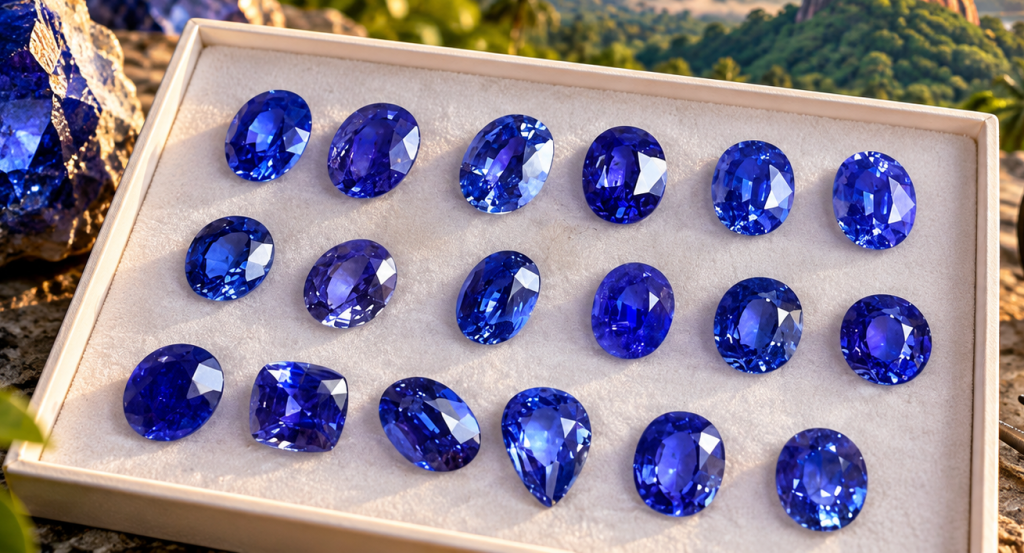
Blue Sapphire
The most recognised sapphire variety, valued for its colour, transparency, cut and overall beauty. Like all sapphires, it consists mainly of aluminium oxide (Al₂O₃). Iron and titanium are the main trace elements associated with its blue colour.
Padparadscha Sapphire
A rare sapphire with a delicate combination of pink and orange. It consists mainly of aluminium oxide (Al₂O₃), with trace elements and crystal defects contributing to its distinctive colour. Important stones may require specialised laboratory assessment.
Pink Sapphire
Ranges from soft pastel pink to stronger, more vivid shades. Like other sapphires, it consists mainly of aluminium oxide (Al₂O₃), with chromium often contributing to its pink colour.
Yellow Sapphire
A popular Ceylon gemstone, ranging from light yellow to rich golden tones. It consists mainly of aluminium oxide (Al₂O₃), with iron commonly contributing to its yellow colour.
Fancy Sapphire
Includes natural colours such as green, purple, orange and other shades. All fancy sapphires consist mainly of aluminium oxide (Al₂O₃), while trace elements such as iron, chromium, titanium and vanadium can influence their colour.
What Makes a Sapphire Valuable?
There is no single factor that determines the value of a sapphire. Several important factors should be considered:
Colour — Hue, tone and saturation strongly influence a sapphire’s appearance and desirability.
Clarity — Natural inclusions are common in sapphire. Their type, size and effect on the stone’s appearance can influence its value.
Cut — A well-proportioned cut can enhance a sapphire’s colour, brilliance and overall appearance.
Carat Weight — Fine-quality sapphires become increasingly rare as their size increases. However, carat weight alone does not determine value.
Treatment — Treatments can affect a sapphire’s appearance and value, so sellers should clearly disclose any known treatments.
Origin — For certain sapphires, geographic origin can influence value when a recognised laboratory supports the origin determination.
Sapphire Certification
A gemstone certificate can provide important information about a sapphire, including its identity, weight, measurements, treatment and, where determined, geographic origin.
Depending on the gemstone and its value, you may obtain certificates from recognised Sri Lankan gemological laboratories such as NGJA and GIC.